THE SHIFT Stories from Car Culture
JACKY ICKX
The Complete Racing Driver
By Hans Gruber
Lifelong petrolhead and storyteller
Contributor, THE SHIFT
Formula One. Le Mans. Nürburgring. Bathurst. Dakar.
Today, each of them demands a specialist.
Jacky Ickx belonged to another time.
A time when the greatest drivers did not build careers around a single discipline. They raced whatever was available, wherever the road took them. Grand Prix cars one weekend. Sports prototypes the next. Touring cars. Can-Am. Twenty-four-hour races. And eventually, the desert.
Ickx didn’t simply compete across those worlds.
He won in them.
Perhaps that is why reducing Jacky Ickx to Mr Le Mans has always felt slightly inadequate.
Six victories at the greatest endurance race on earth would define almost anyone else’s career.
For Ickx, they tell only part of the story.
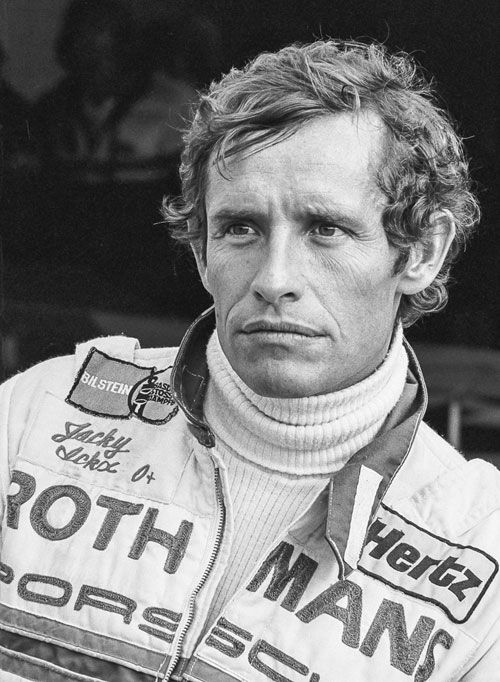
Before the Legend
Jacky Ickx did not grow up consumed by the idea of becoming a racing driver.
Born in Brussels in 1945, the son of motoring journalist Jacques Ickx, his first serious competition came not on four wheels, but two.
Motorcycle trials taught him something that would remain visible throughout his career: balance, mechanical sympathy and an instinctive understanding of grip.
Then came cars.
Touring cars. Formula Two. Sports cars.
And in 1967, the Nürburgring.
Driving a 1.6-litre Formula Two Matra against the vastly more powerful three-litre Formula One machinery, Ickx produced one of those performances that makes an entire paddock pay attention.
His qualifying time was faster than almost the entire Formula One field.
He was 22 years old.
Ferrari noticed.
A year later, Jacky Ickx was a Formula One driver for the Scuderia.
Ferrari
His first Grand Prix victory came in 1968.
Rouen.
Rain.
Exactly the sort of conditions in which feel mattered more than calculation.
Ickx won for Ferrari and immediately established a reputation as one of the outstanding wet-weather drivers of his generation.
But there was something unusual about him.
Formula One was not enough.
At the end of the season, Ickx left Ferrari for Brabham. One reason was remarkably simple: he wanted to race more.
Grand Prix racing alone could not satisfy him.
In 1969, driving for Brabham, he won at the Nürburgring and in Canada and finished second in the World Championship behind Jackie Stewart.
Then he returned to Ferrari.
In 1970, he came even closer.
Three Grand Prix victories late in the season carried him into championship contention against Jochen Rindt, whose fatal accident at Monza had cast a shadow over the entire sport.
Ickx finished runner-up again.
He would never become Formula One World Champion.
History sometimes treats that as an omission.
Perhaps it is better understood as evidence of how difficult Ickx is to measure by Formula One alone.
Eight Grand Prix victories.
Twice runner-up in the World Championship.
And yet some of his greatest drives happened elsewhere.
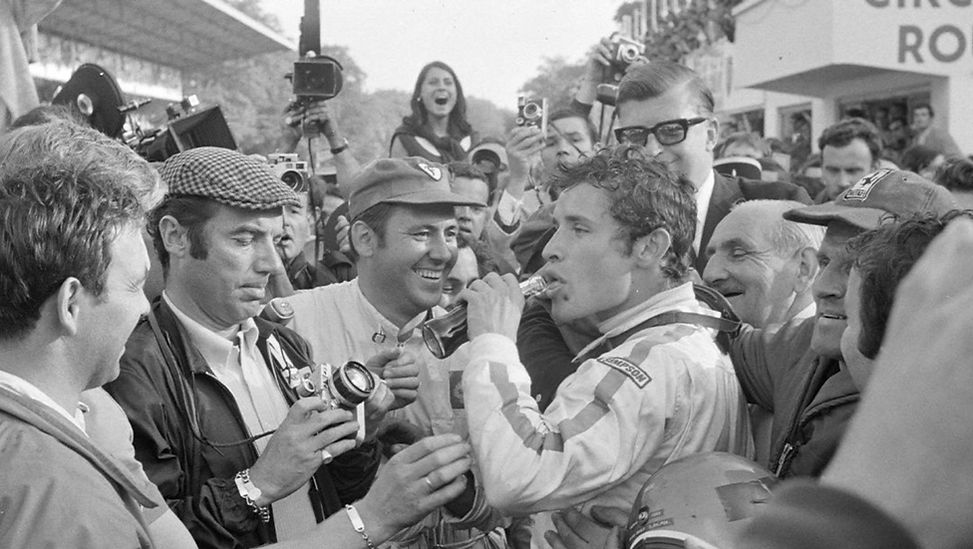
Jacky Icks wins his first Grand Prix, Rouen, France, 1968
The Walk
Le Mans, 1969.
The cars were arranged on one side of the track.
The drivers stood opposite them.
At the signal, they would sprint across the circuit, jump inside, start the engines and accelerate away.
It was spectacular.
It was also dangerous.
Drivers often left before properly fastening their safety belts.
Jacky Ickx had decided he would not participate.
When the flag fell and the others ran, Ickx walked.
Slowly.
Deliberately.
Across the circuit.
He climbed into his Ford GT40, fastened his belts properly and departed last.
Twenty-four hours later, he won.
The margin over the Porsche 908 of Hans Herrmann and Gérard Larrousse was around 100 metres after an entire day of racing.
But the victory was bigger than the result.
Ickx’s walk became one of motor racing’s great acts of quiet rebellion.
The traditional Le Mans start would soon disappear.
Sometimes changing racing doesn’t require shouting.
Sometimes you simply refuse to run.
Monsieur Le Mans
The 1969 victory was only the beginning.
Ickx returned to win Le Mans in:
1969.
1975.
1976.
1977.
1981.
1982.
Six victories.
For years, it was the record.
But numbers alone cannot explain why Le Mans became so closely associated with Jacky Ickx.
The race rewarded everything he possessed.
Speed without unnecessary aggression.
Mechanical sympathy.
Concentration.
Patience.
Judgement.
And the ability to understand that endurance racing is not won by treating every lap like qualifying.
In 1977 came perhaps the defining performance.
His own Porsche 936 retired early.
Ickx was transferred into the sister car of Jürgen Barth and Hurley Haywood, which had already fallen far behind after mechanical problems.
Then he drove.
Through the night, Ickx attacked with extraordinary consistency, dragging the Porsche back into contention.
The impossible slowly became possible.
By Sunday, Porsche had won.
It remains one of the great comeback stories in the history of Le Mans.
Ickx was not merely fast.
He understood the race.

Jacky Ickx walked and won

Derek Bell and Jacky Ickx at the podium in Le Mans, 1982
Porsche
Few driver-manufacturer relationships feel as natural in retrospect as Jacky Ickx and Porsche.
Together they became one of endurance racing’s defining combinations.
Ickx won Le Mans four times for Porsche. Three with the 936 and, in 1982, with the revolutionary 956.
That final victory carried its own significance.
The Porsche 956 was new.
Group C was beginning.
And once again, Ickx was there at the beginning of another era.
Alongside Derek Bell, he delivered victory on the 956’s first appearance at Le Mans.
The same season, Ickx became World Endurance Champion.
By then he was 37.
He was still among the fastest endurance drivers in the world.
The Nürburgring
Long before Le Mans became inseparable from his name, another circuit had revealed what Jacky Ickx could do.
The Nürburgring Nordschleife.
Few places better suited him.
In 1967, it announced his arrival.
In 1969, he returned with Brabham and won the German Grand Prix, beating Jackie Stewart by almost a minute.
Three years later, driving for Ferrari, he won there again.
Pole position.
Fastest lap.
Victory.
His final Formula One win.
The old Nürburgring demanded memory, courage, improvisation and absolute confidence in a car moving beneath you.
More than 20 kilometres of crests, compressions, blind corners and changing surfaces.
There were drivers who survived the Nordschleife.
Ickx mastered it.

Jacky Ickx flying to victory with the Brabham, Nürburgring, 1969
Bathurst
Then there is Australia.
Mount Panorama.
In 1977, Ickx travelled to Bathurst and joined Allan Moffat in a Ford Falcon XC for the Bathurst 1000.
It was unfamiliar territory.
Different cars. Different racing culture.
One of the most intimidating circuits anywhere in the world.
They won.
Moffat’s two Falcons famously crossed the finish line together, first and second, in one of Australian motorsport’s defining images.
For Ickx, it became another line on an increasingly improbable résumé.
Formula One winner.
Le Mans winner.
Nürburgring master.
Bathurst winner.
Most careers would have been complete.
Jacky Ickx was not finished.
Africa
By the beginning of the 1980s, Ickx could have stopped.
Instead, he went somewhere completely different.
Africa.
The Paris-Dakar was still young, wild and genuinely uncertain. It demanded navigation, endurance and survival across landscapes where conventional circuit-racing experience meant very little.
Ickx entered for the first time in 1981.
Two years later, alongside French actor and navigator Claude Brasseur, he won the 1983 Paris-Dakar in a Mercedes-Benz 280 GE.
Consider the distance between those worlds.
A Ferrari Formula One car at the Nürburgring.
A Ford GT40 at Le Mans.
A Porsche prototype at 350 km/h on the Mulsanne Straight.
A Ford Falcon across Mount Panorama.
A Mercedes G-Class crossing Africa.
Same driver.
Ickx would eventually compete in the Dakar fourteen times.
It was not a retirement hobby.
It was another test.
And testing himself had always been the point.

Jacky Ickx at the wheel, Bathurst:, Australia, 1977

Ickx driving to victory in the Sahara, 1983
The Complete Driver
Modern motorsport produces extraordinary specialists.
Formula One drivers dedicate almost their entire lives to Formula One.
Endurance drivers master traffic, energy management and long-distance racing.
Rally-raid competitors learn to read landscapes where there may barely be a road.
The professionalisation of the sport made that inevitable.
Which is precisely why Jacky Ickx’s career feels increasingly extraordinary.
He crossed those boundaries before they became walls.
He could qualify a Formula Two car among Formula One machinery.
Win Grands Prix for Ferrari and Brabham.
Walk across the track at Le Mans in protest, then win the race.
Master the Nordschleife.
Win Bathurst.
Become World Endurance Champion.
And then disappear into Africa and win the Dakar.
There were drivers with more Formula One championships.
Others eventually won Le Mans more times.
Some accumulated greater statistics in individual categories.
But that misses the point.
Jacky Ickx belongs to the rarest category of racing driver.
Give him a circuit.
Give him rain.
Give him darkness.
Give him a prototype, a Grand Prix car, a touring car or a machine pointed towards the Sahara.
He would find a way to be fast.
Not the greatest Formula One driver.
Not the greatest rally driver.
Not even, statistically, the greatest Le Mans driver anymore.
Something perhaps more unusual.
The complete racing driver.

Jacky Ickx relaxing while his Porsche 959 is repaired, Rally Dakar, 1986

