THE SHIFT Stories from Car Culture

The Dream That
Shouldn’t Have Worked
In 1994, a 22-year-old Swedish entrepreneur decided to build the world’s greatest sports car.
His name was Christian von Koenigsegg.
He had no car company experience, no factory, and very little money.
But he had something else, a stubborn belief that small teams could build extraordinary machines.
That belief became Koenigsegg Automotive, founded in Sweden with the goal of producing a “world-class” performance car.
Three decades later, the company would redefine what a hypercar could be.
“If you have a dream and you are stubborn enough, you can actually make it happen.”
The Film That Started It All
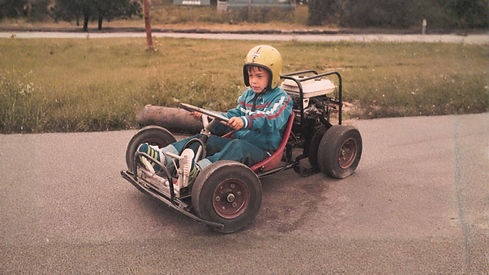
The dream started with an unlikely source.
As a child, Christian watched the Norwegian stop-motion film “Pinchcliffe Grand Prix.”
The story follows a bicycle repairman who builds his own racing car and defeats established manufacturers.
The message stayed with him.
Years later he would say:
“I realized that if someone could imagine it, someone could build it.”
That idea became Koenigsegg.

The First Prototype
The early years were fragile.
Koenigsegg operated from small facilities with a tiny team and almost no resources.
After two years of work, the first prototype, simply called CC, was completed in 1996.
The car debuted at the Anderstorp race track, where professional drivers tested it and confirmed that the concept worked.
It was rough.
But it proved the dream was real.
“At the beginning we didn’t know if it would work. We only knew we had to try.”
Radical Thinking From Day One
From the beginning, Koenigsegg followed a different philosophy.
Instead of competing with established brands like Ferrari or Lamborghini, the company focused on radical engineering:
• Extreme lightweight construction
• Innovative aerodynamics
• Unprecedented power-to-weight ratios
• Constant technological experimentation
This obsession with engineering purity would eventually push the company into the realm of hypercars.
“We constantly question how things are done.”


The First Production Car
CC8S | 2002
After nearly eight years of development, Koenigsegg delivered its first production car.
The CC8S.
It featured a carbon fiber chassis, a removable roof, and a powerful V8 engine.
The model would soon earn a Guinness World Record for the most powerful production engine of its time.
Only six units were produced.
But the message was clear: Koenigsegg had arrived.
The Doors That Became Iconic
Koenigsegg introduced one of the most recognizable features in modern hypercars.
The Dihedral Synchro-Helix doors.
Instead of opening upward like traditional scissor doors, they rotate outward and upward simultaneously.
The system was designed to open dramatically while requiring minimal side space.
More importantly, they became an unmistakable part of Koenigsegg’s identity.
“Design should serve both beauty and function.”


Disaster
In 2003, catastrophe struck.
A fire destroyed Koenigsegg’s original factory in Margretetorp.
For a small startup, the loss could have ended everything.
Instead, the company moved to an abandoned Swedish Air Force base in Ängelholm, where fighter jets once operated.
The hangars became a new home.
“Every setback can become an opportunity if you refuse to give up.”
The Ghost Squadron
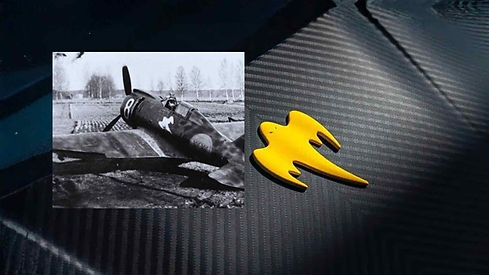
The previous occupants of the airbase were a fighter squadron known as the Ghost Squadron.
Their aircraft carried a ghost emblem.
The Swedish Air Force allowed Koenigsegg to adopt the symbol.
Today every Koenigsegg carries that ghost.
A tribute to the squadron and to resilience.

The Rise of the Hypercar
Throughout the 2000s, Koenigsegg steadily refined its machines.
Models like the CCR, CCX, and CCXR pushed performance boundaries and began attracting global attention.
The company’s approach was simple:
Small production, maximum innovation,
no compromises.
The world was beginning to notice.
“We never wanted to be the biggest. We wanted to be the best.”
Agera
The Breakthrough
The Agera, introduced in 2010, elevated Koenigsegg into the hypercar elite.
With extraordinary power and advanced aerodynamics,
the Agera quickly became one of the most celebrated performance cars of the decade.
It combined brutal speed with engineering precision.

Agera RS
The Record Breaker
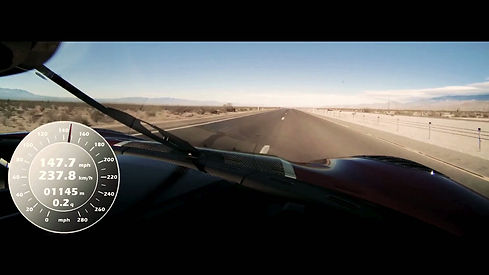
The Agera RS pushed performance even further.
In 2017 it set a verified 457.94 km/h top-speed record for a production car.
Acceleration records followed.
Koenigsegg had redefined the limits of road-legal performance.
One:1
The First
In 2014 Koenigsegg introduced the One:1.
Its name described the goal:
one horsepower per kilogram of weight.
With around 1,360 hp, the One:1 became the first production car to achieve a true 1:1 power-to-weight ratio.
Koenigsegg called it the world’s first Megacar.
Only seven units were built.
“The goal was simple. Absolute efficiency.”


Regera
Reinventing the Transmission
In 2015 Koenigsegg shocked the industry again.
The Regera abandoned the traditional gearbox entirely.
Instead it introduced Koenigsegg Direct Drive, which connects the engine directly to the rear axle without a conventional transmission.
The result:
seamless acceleration and extraordinary efficiency.
Only 80 units were built.
Engineering
Without Compromise
Koenigsegg builds almost everything in-house.
Engines.
Transmissions.
Carbon fiber components.
Christian von Koenigsegg once explained:
“Innovation happens when you remove limitations.”
That philosophy drives every Koenigsegg.

Jesko
A Tribute
The Jesko, unveiled in 2019, was named after Christian’s father, Jesko von Koenigsegg.
It features a heavily developed twin-turbo V8 producing up to 1,600 hp on E85 fuel.
The car introduced several groundbreaking technologies:
• A new flat-plane crankshaft
• Extreme high-rpm capability
• Massive aerodynamic downforce
But the real innovation lies in the gearbox.
Light Speed Transmission
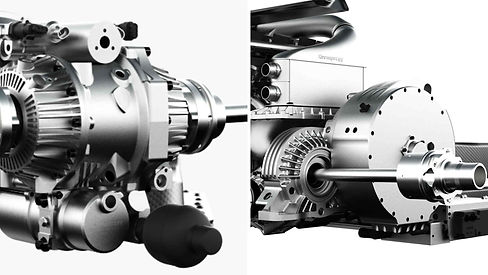
Koenigsegg developed the Light Speed Transmission (LST) for the Jesko.
The system uses multiple clutches to allow near-instant gear changes.
Shifts can occur in 20–30 milliseconds, delivering uninterrupted power delivery.
It’s one of the most advanced transmissions ever fitted to a road car.
“The goal was to eliminate the delay between gears.”


The Future of Speed
The Jesko Absolut represents Koenigsegg’s pursuit of ultimate velocity.
Its aerodynamic design aims to push the boundaries of what a production car can achieve.
The mythical 482 kmh (300 mph) barrier is now within reach.
Innovation as a Culture
What defines Koenigsegg isn’t just speed.
It’s invention.
From camless engines and advanced composites to revolutionary transmissions and hybrid systems, the company continually challenges automotive conventions.
Almost every component is developed in-house.
“Innovation comes from questioning everything.”


A Different Kind of Manufacturer
Koenigsegg is not a traditional car company.
It’s an engineering laboratory.
A place where unconventional ideas become real machines.
Every model pushes the limits a little further.
The Outsider
Who Changed Everything
When Christian von Koenigsegg started his company, most people thought the idea was impossible.
Today Koenigsegg stands among the most respected hypercar manufacturers in the world.
Not because it followed tradition.
But because it ignored it.
And built something extraordinary instead.


