THE SHIFT Stories from Car Culture

THE INDIVIDUAL
The Return of Bespoke Performance
For decades, supercars were shaped by large manufacturers, big budgets, and industrial logic.
Even the most extreme machines were filtered through layers of committees and compromise.
That era is quietly changing.
What’s emerging now isn’t about scale or spectacle.
It’s about individuals.
A SHIFT IN POWER
Across Europe and beyond, a new movement is taking form.
Designers, engineers, collectors, and visionaries are coming together to build the car they believe should exist, even if it’s built only once.
Not startups chasing volume.
Not brands chasing relevance.
Small ateliers, focused on clarity of purpose.

GARAGISTI GP1
25 Units

CAPRICORN ZAGATO
19 Units
A DIFFERENT STARTING POINT
What defines this new generation isn’t horsepower, price, or lap times.
It’s origin.
These cars don’t begin with a market study.
They begin with a question.
What would my ideal car feel like to drive?
What would I refuse to compromise on?
Everything follows from that.
THE ATELIER MODEL
From that first question, a focused structure forms.
Sometimes it’s a small atelier built around a founder’s vision.
Sometimes it’s a historic coachbuilder reborn under new leadership.
Sometimes it’s a design house stepping beyond consultancy to build its own machine.
A design studio to shape the identity.
An engineering partner to deliver performance.
Selective production, measured in tens, not thousands.
The car isn’t designed for the market. It’s created in spite of it.

NILU 27
15 Units

PININFARINA B95
10 Units
THE MODERN COACHBUILDERS
Names like Garagisti, Capricorn, Nilu, Oilstainlab and others represent more than emerging marques.
So do historic design houses and coachbuilders reborn under new leadership, names like Bertone returning with limited editions such as the Runabout and GB110, or Pininfarina stepping beyond consultancy to create ultra-limited machines like the B95.
These projects, whether new ateliers or revived legends, represent something deeper than branding.
They represent a mindset.
Small teams. Direct access to decision-makers. No legacy production quotas. No obligation to satisfy global volume targets.
Only a commitment to the original idea.
In some cases, that idea comes from a founder. In others, from a patron.
Sometimes from a historic name determined to prove it still has something radical to say.
The structure may differ. The philosophy does not.
Limited production. Focused intent. Creative autonomy.
That is the common thread.
DECLARATIONS, NOT PRODUCTS
Some of these projects work with established design studios.
Others operate like modern coachbuilders, blending old-world craft with modern tools.
Production numbers are irrelevant.
Sometimes the car exists simply because one person refused to accept what was available.
These are not products.
They are declarations of intent.
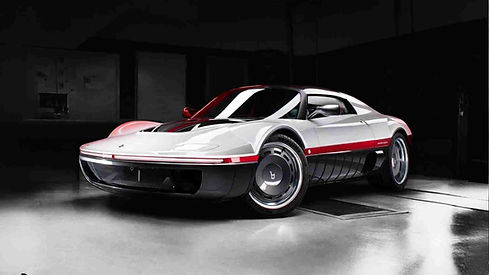
BERTONE RUNABOUT
25 Units

BERTONE GB110
33 Units
FROM BUYING
TO COMMISSIONING
Perhaps the most important shift is this:
You no longer simply buy a supercar from a global catalogue.
You choose a vision.
Unlike mass manufacturers offering endless configurations, these cars are defined by a clear creative direction before you ever arrive.
You’re not selecting trim packages. You’re aligning with an idea.
Like architecture or haute horlogerie, the value lies not in options, but in authorship.
SMALL TEAMS, BIG AUTHORITY
In these projects, decisions are made closer to the source.
Fewer layers.
Fewer committees. Fewer compromises.
The distance between idea and execution is shorter.
Design doesn’t need to survive multiple departments.
Engineering doesn’t need to justify itself to quarterly targets.
That proximity changes the outcome.
What emerges is not louder. It is clearer.
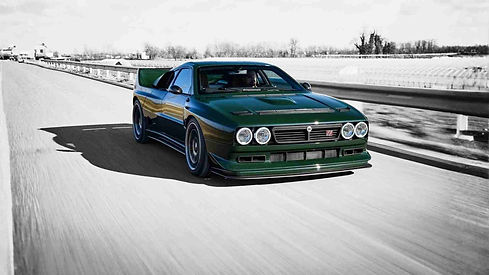
KIMERA EVO37
37 Units

7.0-liter, quad-turbo V12 installed on the Krafla by Giamaro developed by Italtecnica
WHY NOW
This movement didn’t appear by accident.
Technology has levelled the field.
Access to carbon tubs, advanced simulation, and specialised suppliers is no longer reserved for industrial giants.
Small teams can now build at a level once thought impossible without scale.
At the same time, the collector has evolved.
Endless “limited editions” differentiated by colour, stitching, or plaque no longer carry the same weight.
Rarity on its own is no longer enough. Meaning is.
A RETURN, NOT A REBELLION
This isn’t a rejection of Ferrari, Lamborghini, or the great manufacturers.
It isn’t anti-industry.
It’s a return to an earlier dynamic, when vision could sit closer to execution, and the distance between designer and machine was shorter.
The difference today is that modern tools allow small teams to reach levels of performance and precision once reserved for large industrial structures.
Scale is no longer the only path to excellence.

GIAMARA KRAFLA
30 Units

OILSTAINLAB HF-11
25 Units
MEANING OVER SCALE
What we’re witnessing isn’t the future of mass production.
It’s the rise of something more deliberate.
A future where creation carries authorship.
Where limited doesn’t mean marketing, but intention.
Not louder. Not necessarily faster.
More considered. More defined. More personal.