THE SHIFT Stories from Car Culture
The Miura and the Saab
A passion for cars passed down through four generations
and now part of KINGSHIFT
By António Ferreira
Lifelong Petrolhead
KINGSHIFT LIVE Manager
The Spark
Every passion has an origin.
For some, it starts with the sound of an engine echoing through the streets on a Sunday morning.
For others, it’s a toy car, a racing poster on a bedroom wall, or the first time they stood trackside and felt the ground shake beneath their feet.
No two stories are ever the same.
Yet every enthusiast has a moment when cars stop being machines and become something deeply personal.
With The Spark, we wanted to create a space for those stories.
Not the stories of celebrities.
Not the stories you have read a hundred times before.
But the stories of the people who make up the heart of KINGSHIFT.
The people helping to build the KINGSHIFT ecosystem, collaborating with it, supporting it, and the members of our growing global community.
From the Americas to Europe, from the Middle East to Australia, all share the same passion that brought us here in the first place.
In every issue, a different voice will take us back to the moment when everything began.
And appropriately, our first The Spark comes from António Ferreira, Manager of KINGSHIFT LIVE, a new division of the KINGSHIFT ecosystem, coming soon.
In these pages, António takes us back through four generations of passion, family and motorsport, to the moments that created his own spark and ultimately brought him to KINGSHIFT.
Because before the collections, the road trips, the race weekends, the restorations or the dream cars…
There was always a first spark.
And perhaps, somewhere in these pages, you’ll recognise your own.
Alessandro Nobile
Editor, THE SHIFT
Every Passion Has an Origin
There are sounds that are never simply heard.
They are felt.
They settle beneath the skin and quietly become part of who we are.
The rising note of an engine climbing through the revs. The smell of petrol carried by the crisp morning air.
The electric silence that hangs over a starting grid in the final seconds before the lights go out.
For me, these are more than memories.
They are part of my identity.
A continuous thread woven through my life, to the point where I can no longer tell where the memories end and
where I begin.
My passion for cars was never something I chose.
It was something I inherited.
Where It All Began
That inheritance came from my grandfather and my father.
Both were deeply connected to motorsport at a time and in a place where such a passion was anything but common.
We lived in Vinhais, a small mountain town in the far northeast of Portugal, surrounded by winding roads and vast distances that, in those days, felt even greater than they really were.
My family was among the first in the region to own an automobile. It was a Ford Model A.
I often imagine the impression it must have made as it crossed those remote roads.
To the people who watched it pass, it must have seemed like something from another world.
Without realising it, my grandfather gave me the moment that would shape the rest of my life.
The car was a caramel-coloured 1973 Saab 99, bought new from a well-known Saab dealership in Porto.
Its restrained Scandinavian design stood out completely against the backdrop of rural Portugal.
One day, sitting behind its wheel with hands still too small to comfortably reach a steering wheel that seemed enormous, I drove a car for the very first time.
Even today, whenever I see a Saab 99, everything around me seems to stop for an instant.
Not only because of the car itself, but because, for a brief moment, I see my grandfather again.

The SAAB 99. Still part of António's family
Sundays Belonged to Formula 1
Sunday lunch in our house followed a ritual that was never questioned.
Formula 1 came first.
The table was set. The food grew cold. No one complained.
Every eye in the room was fixed on the television.
There were no conversations. Certainly no interruptions.
The race was on.
That was how names like Niki Lauda, Alain Prost, Nelson Piquet, Keke Rosberg and Emerson Fittipaldi became
part of my childhood, long before I truly understood racing strategy or the mechanics of a car.
They were our Sunday heroes.
Their helmets, their cars and their victories became as familiar as any other family tradition.
But television, no matter how captivating, can never prepare you for what happens when racing cars pass just
a few metres away.
The Day Everything Changed
In 1984, my father took me to the Estoril Circuit for the very first time.
The journey felt endless. With every kilometre, the anticipation grew stronger until, suddenly, I heard the cars before I could even see them.
Nothing prepares you for that moment.
The sound doesn’t simply reach your ears.
It passes through your body.
The air vibrates. The smell of hot rubber and fuel fills every breath.
Standing against the catch fencing, I watched a young Brazilian driver named Ayrton Senna drive past in a Toleman wearing the colours of Segafredo.
I fell in love instantly. Some passions never fade once they take root.
Returning the following year was inevitable.
In 1985, beneath relentless rain and umbrellas that offered little protection, we watched Senna, now driving the black Lotus, claim his first Formula 1 victory.
I still remember looking at my father.
His expression said everything.
We both knew we had witnessed history.

Keke Rosberg and Emerson Fittipaldi, Argentina Grand Prix, 1980

Senna's first win in F1, Portuguese Grand Prix, 1985
The Journey Was Part of the Adventure
Getting to Estoril was an adventure in itself.
We left Vinhais, crossed the country to Porto, left the car near Devesas railway station and continued the journey
to Lisbon by train.
We refused to miss a single moment of that weekend.
It was more than a sporting event.
It was a family pilgrimage.
Estoril also opened the door to the wider world of Portuguese motorsport.
Alongside Formula 1, we enthusiastically followed the national touring car championships.
I particularly remember the dominance of Sidónio Cabanelas, Portuguese Group A champion in 1984 behind
the wheel of the imposing BMW 528i.
Being a driver from Vila Real, close to our hometown, he naturally became our hero.
For those of us from the North of Portugal, there was a special connection. almost a matter of regional pride.
The irreverent Visa Trophy also brought the grandstands to life, while our family calendar revolved around races that simply could not be missed:
The Falperra Hillclimb.
The Vila Real Street Circuit.
The races at Vila do Conde.
And in Vila Real, there were rituals beyond the racing.
Stopping at Xaxoila for tripas aos molhos was compulsory. Later came the covilhetes.
Those stops became as firmly embedded in my memory as the cars themselves.
Only much later did I understand that the real value of those moments wasn’t simply the competition.
Racing gave us a reason to travel, talk, laugh and spend time together.
Without realising it, we were strengthening the bonds of our family.

Sidónio Cabanelas, Vila Real, 1983
Small Cars, Big Dreams
There was another ritual. A quieter one.
A secret shared between my father and me.
Whenever he travelled to Porto, I knew there was a chance he would return carrying a small box from Bazar Londres or Bazar Paris.
The anticipation of opening that unexpected package and discovering which miniature was inside remains one of the purest memories of my childhood.
I still have many of those little metal cars today.
Among them all, there was always one favourite: The Lamborghini Miura.
My fascination with that car became so strong that when my son was born in 2006, he was given my name, António Duarte, but from his very first day I began affectionately calling him…Miura.
I can think of no greater tribute to that little toy car I had treasured throughout my life.

1980's Miura miniature
Beyond the Circuits
Our devotion to cars was never confined to circuits.
The Rally of Portugal occupies a very particular place in my memories.
The dust.
The almost mythical atmosphere surrounding stages such as Fafe-Lameirinha or Carvalho de Rei, in the Serra do Marão. The smell of the earth, sometimes dry, sometimes soaked by rain, and the echo of engines tearing through the hillsides.
And then there were the crowds, packed along the roadside with a courage that today seems almost impossible to comprehend.
Then there was the Paris-Dakar.
That passion came through my godfather Vasco, my father’s brother.
He introduced me to a completely different side of motorsport.
Harder.
More unpredictable.
More human.
Winning mattered, of course. But the true measure of a competitor was often simply the ability to endure.
Together, year after year, we followed the great legends of the desert.
I remember 1983, when the charismatic Jacky Ickx, already celebrated for his victories at the 24 Hours of Le Mans,
won behind the wheel of a Mercedes.
Later came Peugeot and the extraordinary 205 Turbo 16 of Ari Vatanen, victorious in 1987.
Yet the driver I always felt closest to was Juha Kankkunen, winner in 1988 with the Peugeot 405 Turbo 16.
Kankkunen once had a house in Árvore, Vila do Conde, right next to my parents’ holiday home.
That proximity somehow made his victories in the Dakar feel almost like a family affair.
The stories of the desert were very different from those of Formula 1.
On a circuit, success was measured in tenths of a second.
In the Dakar, it was measured in kilometres, in days and, sometimes, simply in the ability to survive the desert.
All of this happened in a Portugal with only two television channels.
In Vinhais, however, our proximity to Spain meant we could receive Spanish television, which offered far more coverage of international motorsport.
It became our window onto the world.
Without it, everything would have seemed even further away.
Passing the Torch
The years passed, but the inheritance remained intact.
My Miura, my son António Duarte, also became hopelessly passionate about cars.
The torch passed from one generation to the next with a naturalness that is difficult to explain.
Almost as if the passion had always been inside him, simply waiting for the right moment to awaken.
Years later, I took him to Barcelona to experience Formula 1 live.
Lewis Hamilton won that day, while Sebastian Vettel, driving for Ferrari, finished fourth.
But when the engines roared and the cars crossed the start-finish straight for the first time, I wasn’t looking at the track. I was looking at my son.
I saw a mixture of astonishment, shock and fascination on his face.
It was exactly the expression I must have had at Estoril in 1984, when my father took me to see a race for the first time.
At that moment, the circle closed.

Kankkunen/Piironen, winners of the Dakar 1988

Spanish Grand Prix, 2018
Four Generations. One Passion.
My grandfather.
My father.
Me.
And now my son.
Four generations connected by the same passion.
By the same sound.
By the same emotion capable of travelling through time.
Today, I understand that this story was never truly about metal, engines or horsepower.
It was always about family.
About those endless journeys, everyone squeezed inside the car but surrounded by conversation and laughter.
About waiting months for a small miniature.
About the tenderness of learning to drive with the hands of someone who loves you guiding your own.
It is about the sound of an engine that can still make the hairs on my arms stand up and, in an instant, transport me back to a happy Sunday in my childhood in Vinhais.
The Legacy
It is that legacy, received from my grandfather and my father, and now passed on to my son, that brings me to KINGSHIFT.
I see in KINGSHIFT LIVE an opportunity to help create what will surely become one of the most unique car culture events in the world.
An experience capable of giving a child today what Estoril gave me in 1984.
To make their heart beat faster.
To make them dream.
And perhaps, for the very first time, to make them believe that anything is possible.
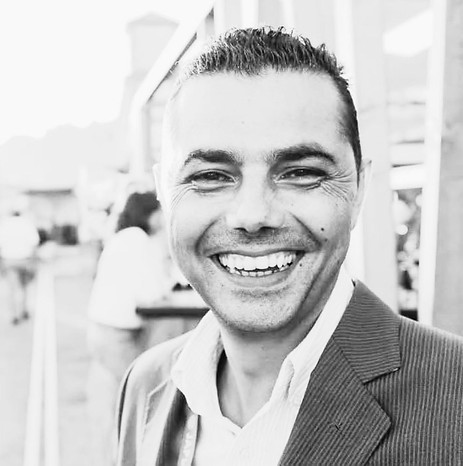
António Ferreira

