THE SHIFT Stories from Car Culture
There are fast cars. Beautiful cars. Successful racing cars.
And then there is the Ferrari 250 GTO.
A machine so revered that it has transcended the world of automobiles and entered something closer to mythology.
Today, it is regularly described as the most valuable car on earth.
Collectors compete for the opportunity to own one.
Museums celebrate it. Historians study it.
Enthusiasts speak of it with a level of admiration normally reserved for works of art.
Yet none of that was part of the original plan.
The 250 GTO was not created to become a museum piece.
It was built for one purpose.
To win.

Ferrari 250 GTO
Built Under Pressure
By the early 1960s, Ferrari faced a familiar challenge.
Success in motorsport never guaranteed future victories.
Competition was becoming increasingly fierce, particularly from Jaguar, Aston Martin, and a new generation of manufacturers determined to challenge Maranello's dominance.
The FIA's Grand Touring regulations required race cars to be based on production models.
Ferrari's answer was to evolve the successful 250 GT SWB into something faster, lighter, and considerably more focused.
The project would eventually become known as the 250 GTO.
The initials stood for Gran Turismo Omologato, meaning homologated grand touring car.
The name sounded technical. The machine was anything but ordinary.
Behind closed doors, a small group led by Giotto Bizzarrini began transforming the already capable SWB into a racing weapon.
Everything was questioned. Everything was refined. Every unnecessary kilogram was scrutinized.
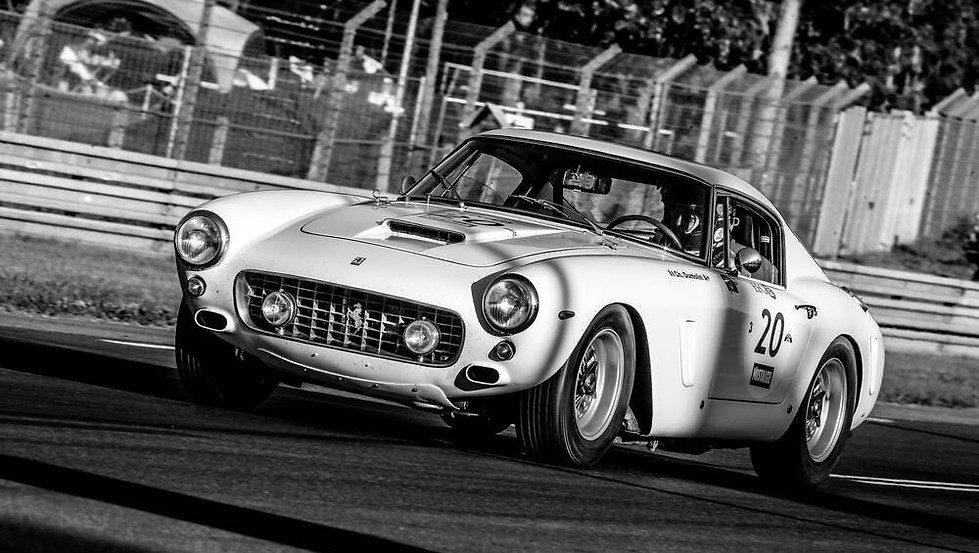
Ferrari 250 GT SWB, Le Mans, 1960
Shaped By The Wind
The 250 GTO's appearance is often described as beautiful.
But beauty was never the objective. Performance was.
Its distinctive shape emerged from countless hours of experimentation aimed at improving stability and reducing drag at racing speeds.
Unlike many cars of the era, its form was dictated by aerodynamics rather than styling trends.
The low nose. The elongated bonnet. The sculpted rear section. The famous roofline.
Every surface served a purpose.
The result was a car that looked alive even when standing still.
Decades later, designers still point to the GTO as one of the purest examples of functional beauty ever created.
A machine where engineering and aesthetics became impossible to separate.

The Heart of a Champion
Beneath the long bonnet sat one of Ferrari's greatest engines.
A naturally aspirated 3.0-litre Colombo V12.
It produced approximately 300 horsepower, a remarkable figure for the period.
But numbers alone fail to explain the experience.
The engine delivered its power with a soundtrack that remains one of the defining sounds of automotive history.
Mechanical.
Raw. Unfiltered.
At over 7,000 rpm, the V12 did not simply accelerate.
It sang.
Combined with a lightweight chassis and exceptional balance, the GTO offered a level of driver engagement that few machines, then or now, could replicate.
This was not a car that isolated its driver from the experience.
It demanded participation.
It rewarded commitment.
And it punished mistakes.

250 GTO Tipo 168/62 Colombo V12 Engine
Racing The World
The 250 GTO made its competition debut in 1962.
Almost immediately, it proved Ferrari had created something extraordinary.
It dominated the FIA's GT category, securing class victories across Europe and becoming one of the most successful grand touring race cars ever built.
The GTO competed at legendary venues including Le Mans, the Targa Florio, Nürburgring, Goodwood, and Tour de France Automobile.
Against increasingly capable rivals, it repeatedly demonstrated a combination that every racing team dreams of.
Speed. Reliability. Consistency.
The car helped Ferrari secure the International Championship for GT Manufacturers in 1962, 1963, and 1964.
For a machine produced in extremely limited numbers, its impact on motorsport was enormous.
.jpg)
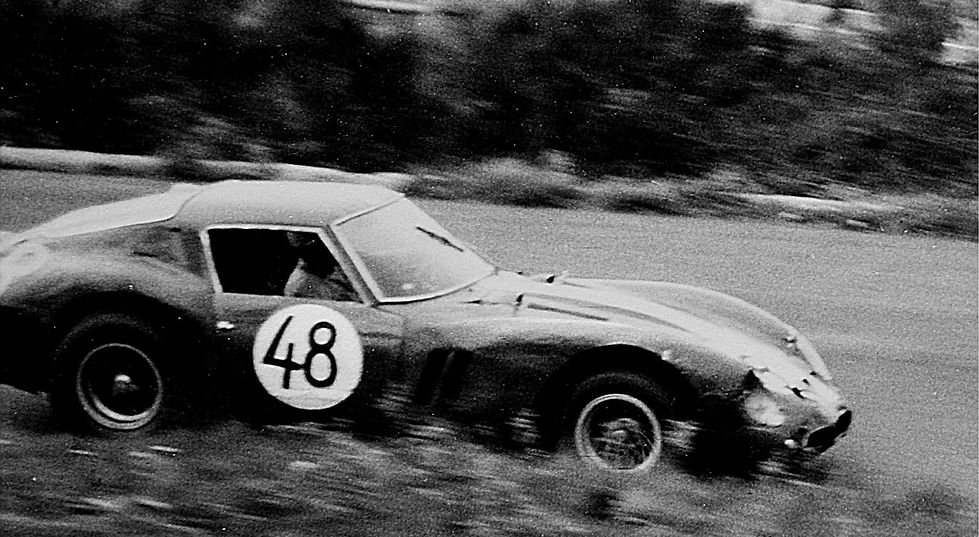
250 GTO, 1000km Nürburgring, 1963
Only Thirty-Six
Part of the GTO's mystique comes from its rarity.
Only thirty-six examples were built between 1962 and 1964.
Even by Ferrari standards, that number was exceptionally small.
Yet rarity alone does not create legends.
Many rare cars are forgotten.
The GTO endured because every example possesses genuine historical significance.
Almost every chassis carries a documented competition history.
Many raced at the highest level. Many survived. Many remain active today.
The result is a car where virtually every individual example has become a chapter of automotive history in its own right.

The 250 GTO Triple Vents
From Race Car to Masterpiece
Something unusual happened as the decades passed.
The GTO stopped being viewed solely as a racing machine.
It became a cultural object.
Collectors began treating it with the same reverence given to masterpieces hanging in galleries.
Auction records followed. Then more records. And more.
Each sale seemed to establish a new benchmark for what an automobile could be worth.
Eventually, values crossed thresholds that once seemed unimaginable.
Tens of millions. Then significantly more.
The GTO became the ultimate symbol of automotive collecting.
Not because it was expensive.
Because it represented everything enthusiasts value most.
Performance. Beauty. History. Authenticity. And rarity.
All in one machine.

1962 250 GTO sold for 51.7M at a Sotheby's auction in New York
The Ferrari Everyone Chases
Every great Ferrari that followed has, in some way, lived in the shadow of the 250 GTO.
The F40.
The Enzo.
The LaFerrari.
The Daytona SP3.
Each represents the pinnacle of its era.
Yet when conversations turn to the greatest Ferrari ever built, the GTO remains the benchmark.
The reference point. The standard against which legends are measured.
Not because it was the fastest. Not because it was the most technologically advanced.
It wasn't.
The GTO occupies its position because it achieved something far more difficult.
It became timeless.
More Than A Car
The Ferrari 250 GTO began life as a tool for racing.
A machine designed to win championships and beat rivals.
It accomplished that mission with remarkable success.
What nobody could have predicted was what happened next.
Over six decades later, it remains one of the most admired automobiles ever created.
Not merely a Ferrari.
Not merely a race car.
But a symbol of what can happen when engineering, competition, beauty, and passion converge at precisely the right moment.
Many cars become classics.
Very few become legends.
The Ferrari 250 GTO became something even rarer.
It became untouchable.


