THE SHIFT Stories from Car Culture
STILL BERTONE
The Conversation that Never Ended
By Peter George
Head of Sound & Motion, KINGSHIFT TV
For this story, THE SHIFT spoke with Matteo De Feudis, Bertone's Head of Sales & Marketing, and Andrea Mocellin, Head Designer of Bertone, to understand not only the return of the Runabout, but the philosophy shaping Bertone's new era.
Throughout our conversation, one word surfaced again and again.
Emotion.
In an industry defined by performance, technology and innovation, Bertone believes the automobile still has a deeper purpose.
To make us feel something.

The Bertone Runabout
A Question Asked In 1969
In 1969, Bertone unveiled a concept designed by Marcello Gandini that looked less like a car and more like a challenge.
The Runabout was low, radical, and unapologetically different.
Part speedboat.
Part race car.
Entirely Bertone.
Most concepts are remembered for a season.
Some survive a decade.
Few survive half a century.
Yet more than fifty years later, that same concept would return to Bertone's studio carrying a difficult question.
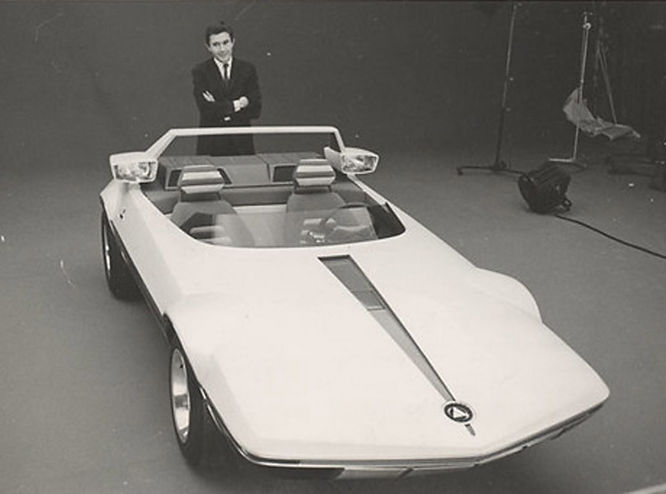
Marcello Gandini and the Runabout concept in 1969
How do you touch an icon
without breaking it?
That question would define the entire project.
For Andrea Mocellin, the challenge was never about recreating a car.
It was about continuing a conversation.
The Weight Of a Name
Few names in automotive history carry the weight of Bertone.
For decades, the company served as a home for some of the most influential minds in automotive design.
Franco Scaglione.
Giorgetto Giugiaro.
Marcello Gandini.
Designers whose ideas helped shape generations of automobiles and redefine what a car could look like.
From the Alfa Romeo BAT concepts to the Alfa Romeo Canguro.
From the Carabo to the Countach.
From the Stratos to countless other icons.
These were not merely cars.
They were statements.
Cars that did not simply follow their era.
They changed it.
Long before Bertone became a brand, it became a way of seeing the automobile.
Boldly.
Fearlessly.
Differently.
Every designer who enters Bertone inherits that history.
But inheritance can be dangerous.
Too much respect for the past creates nostalgia.
Too little destroys identity.
The challenge is finding the space between both.

Andrea Mocellin
When Matteo De Feudis speaks about Andrea Mocellin, he does not speak only about talent.
He speaks about responsibility.
Before leading the design of Bertone's revival, Mocellin built a career across multiple forms of mobility, from automobiles to aircraft and beyond.
Yet the Runabout presented a unique challenge.
Not because of what it was.
Because of what it represented.
A designer can create a beautiful car from a blank sheet of paper.
But how do you reinterpret a design that already occupies a place in automotive history?
How do you respect Gandini without becoming trapped by him?
For Mocellin, the answer was surprisingly simple.
Preserve the soul.
Not the shape.
Not the proportions.
Not the surfaces.
The soul.

Andrea Mocellin, Head of Design at Bertone, during the international launch of the Bertone Runabout.
Beyond Retro
The easiest thing Bertone could have done was build a tribute.
The automotive industry is full of them.
Take a famous silhouette.
Modernise the lighting.
Increase the dimensions.
Add nostalgia.
Call it heritage.
The Runabout followed another path.
Its wedge remains.
Its nautical spirit remains.
Its drama remains.
But its surfaces, proportions and architecture belong entirely to the present.
This is not a recreation.
It is not a copy.
It is a continuation.
A car inspired by 1969 rather than imprisoned by it.
A project that moves beyond retro by preserving the soul of the original Runabout while allowing the design itself to evolve.

Andrea Mocellin sketches of the Runabout
Three Lines
Every great design can be reduced to a few defining gestures.
The Runabout has three.
The wedge.
The layered architecture.
The coda tronca.
Together they create a silhouette that feels familiar and futuristic at the same time.
A car that can be recognised instantly.
The kind of visual clarity that once defined Italian design.
And the kind that has become increasingly rare.
Because memorable design is not complexity.
It is recognition.

Against The Rush
"We have the power now to fight the rush that our society is imposing." Andrea Mocellin
It is a remarkable statement.
Especially in an industry built around acceleration.
But it explains almost everything about the Runabout.
Performance has always been part of the automotive story.
The Runabout simply reminds us that the experience of a car extends beyond numbers alone.
Its purpose is to make people notice.
To slow down.
To observe.
To feel.
The pop-up headlights.
The exposed gear selector.
The compass integrated into the dashboard.
The way light travels across the bodywork.
The way the proportions change as you walk around it.
The details.
The emotions.
The things that cannot be measured.

When Cars Stopped Being Different
Matteo De Feudis believes something important has been lost.
There was a time when automotive design was defined by strong and unmistakable identities.
Different philosophies.
Different aesthetics.
Different interpretations of what a car could be.
Design houses helped create those differences.
They challenged conventions.
They introduced new ideas.
They brought individuality into the industry.
Today, Bertone continues to champion that same spirit.
Not through nostalgia.
Not through repetition.
But through the belief that distinctive design still matters.
The Runabout is Bertone's answer to that philosophy.
A reminder that personality still matters.
A reminder that memorable cars are often the ones with the clearest identity.

Why People Buy Dreams
The most revealing story Matteo told us had nothing to do with design.
Or engineering.
Or performance.
It was about a customer.
A future owner who connected the Runabout to a childhood memory.
A dream.
That story explains something many manufacturers have forgotten.
People do not fall in love with specifications.
They fall in love with meaning.
The cars we remember are rarely the fastest.
They are the ones that become part of our lives.
The ones that remind us who we were.
Or who we wanted to become.

The GB110, Bertone's V10-powered hypercar.
The Spirit Of Nuccio
Every Bertone carries an invisible passenger.
His name is Nuccio Bertone.
You see him in the courage of the shapes.
In the refusal to follow trends.
In the willingness to surprise.
Long before Bertone became a symbol of Italian design, it was an expression of one man's curiosity.
Unpredictable.
Restless.
Uncompromising.
Designers who worked alongside him often describe a figure who encouraged experimentation rather than caution.
Someone willing to take risks.
Someone willing to surprise.
That spirit became Bertone's greatest legacy.
Not a specific shape.
Not a specific car.
An attitude.
The belief that the automobile should provoke a reaction.
That it should challenge expectations.
That it should make people stop and look.
More than fifty years after the original Runabout, that expectation remains.

Why Coachbuilding Still Matters
Coachbuilding once represented the most romantic side of the automobile.
A place where craftsmanship, engineering and imagination met without compromise.
A place where individuality mattered.
The modern automotive industry moves at an extraordinary pace.
Yet Bertone believes there is still room for a different approach.
One that places emotion alongside performance.
Character alongside technology.
Design alongside engineering.
The Runabout is not simply a limited-production sports car.
It is a reminder that distinctive ideas still matter.
That memorable design still matters.
That the relationship between a driver and a machine can be shaped by more than specifications alone.
In many ways, that is what coachbuilding has always been about.
Not building more cars.
Building more meaningful ones.
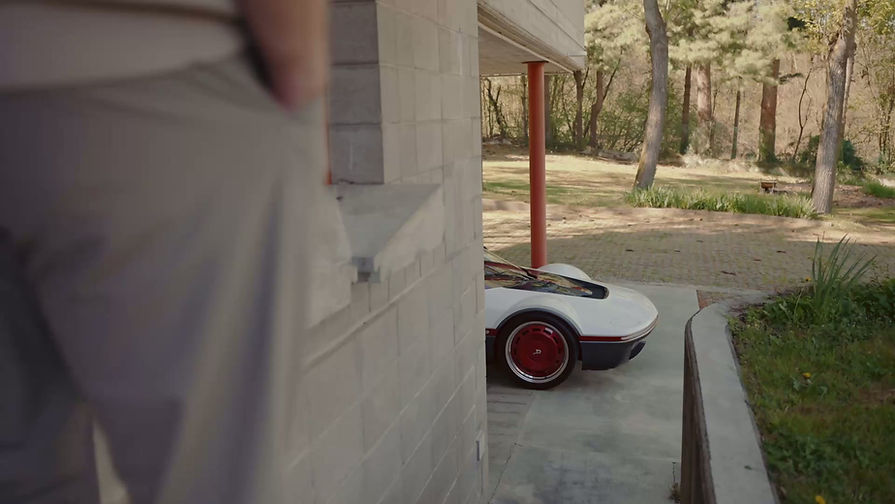
The Bertone Way
Near the end of our conversation, we asked Matteo what comes next.
His answer was immediate.
"Bertone is going to continue being Bertone."
Simple.
Confident.
Almost defiant.
And perhaps that is the perfect way to understand the Runabout.
Not as a revival.
Not as a tribute.
Not even as a product.
But as the latest chapter in a conversation that began in 1969.
A conversation about beauty.
About individuality.
About courage.
And about the belief that cars should make us feel something.


