Some Cars Don’t Belong to a Decade. They Define It.
We got in touch with Mikael Lindberg, automotive designer and former designer at Koenigsegg, and asked him a simple question:
What are the most beautiful car designs of each decade?
What followed was not just a list, but a perspective shaped from within the industry, where proportion, surface, and intention are not abstract ideas, but daily work.
Below is Mikael’s full selection, in his own words.
Alessandro Nobile
Editor
Alfa Romeo 8C 2900 Lungo
1930s
Carrozzeria Touring, design by Felice Bianchi Anderloni.
Almost everything that Carrozzeria Touring touched in the 1930s became the peak of car design and coachbuilding.
The level of proportion became a reference point for generations of manufacturers to come. The details feel perfected, almost like a Swiss watch.
The front grille is a fantastic piece of metalwork. It is not just stamped, but carefully crafted, more like a jewel shaped by a goldsmith.
All metal details are created with the same care. And when you look closer, that same craftsmanship continues inside, in the leather and finishes.
Carrozzeria Touring understood that car design is a moving sculpture on four wheels.
Integrated from every angle, like a masterpiece by Michelangelo.
But perfection would soon be interrupted.


Porsche 356
1940s
Design by Erwin Komenda, concept by Ferry Porsche.
In the aftermath of World War II, the car industry in Europe had crumbled. Many had to shift their focus to support the military industry. They struggled to restart after losing both personnel and financial strength in the devastating war.
The first 356s were built in Austria, made of aluminium.
Its super clean silhouette has been Porsche’s signature ever since, created by the hands of Erwin Komenda. The round headlights and the pronounced rear haunches became part of the brand’s DNA, refined and carried through generations.
The neat details, wide bodywork and short wheelbase reflect its focus on lightness and stability through corners.
The rear engine is integrated and framed just below the rear window, giving the car its distinctive balance.
The overall size, combined with its elegant yet expressive volumes, made it a car for movie stars to be seen in.
“The Little Bastard”, James Dean’s car, was a later evolution.
Even then, the 356 already carried something special.
A classic from Stuttgart, in its purest form.
A new language had emerged.
Mercedes-Benz 300 SL Gullwing
1950s
Design by Friedrich Geiger.
The Gullwing has become a defining character for Mercedes-Benz.
Its soft but pronounced haunches shape both the front and rear expression. When the doors open, the car transforms, revealing a minimal but tasteful interior.
The swivelling steering wheel guides you into the cockpit of a true driving machine.
It carries both elegance and strength, without exaggeration.
A German engineering marvel, still as graceful today as in its prime.
The force is well integrated within its surfaces, controlled, balanced, complete.


Lamborghini Miura
1960s
Carrozzeria Bertone, design by Marcello Gandini.
A masterpiece signed by Gandini.
The Miura became the first car to define what a supercar is. Produced in Sant’Agata, it introduced a completely new vision.
The body is soft and elegant, yet dramatic.
The eye is immediately drawn to the eyelashed headlights.
The rear louvers and front openings interrupt the surface, but in a way that complements the design. The horizontal side intakes create balance between elegance and radical detail.
Later versions simplified some of these elements, but the original remains the most expressive.
Behind it, the engineering team, Dallara, Stanzani, Wallace, created a machine that would become legendary.
At its heart, a transversely mounted V12.
The beginning of something entirely new.
Elegance met provocation.
Lamborghini Countach LP400
1970s
Carrozzeria Bertone, design by Marcello Gandini.
With the Countach, the wedge shape becomes Lamborghini’s bold signature.
There are no compromises here. The influence of the Lancia Stratos Zero is clear, both drawn by Gandini.
What defines Gandini is not a fixed style, but his versatility.
From Miura to Countach, two completely different characters, both equally strong.
The Countach is exaggerated, bold, almost like a space rocket.
More is more.
Exposed air intakes, sharp surfaces, radical proportions.
You either love it or you don’t. There is no middle ground.
The scissor doors complete the experience.
A design executed without compromise, almost without polish.


Ferrari F40
1980s
Carrozzeria Pininfarina, design by Leonardo Fioravanti.
Leonardo Fioravanti is one of the most influential designers in Ferrari’s history, responsible for the Daytona, 308 GTB, 288 GTO and Testarossa.
While the 288 GTO and Testarossa are strong contenders for the decade, the F40 stands apart.
It is less compromised.
Sharper, more focused.
Its clean, almost boxy lines, NACA ducts, round rear lights and pop-up headlights define its identity.
The interior is minimal, as it should be.
Simple wires replace door handles.
The rear window is polycarbonate, perforated for airflow.
Everything points to performance.
The design captures the 1980s perfectly, raw, bold, and unapologetic.
Nothing left to hide.
McLaren F1
1990s
Design by Peter Stevens, concept by Gordon Murray.
Peter Stevens created something exceptional with the F1.
The proportions are perfectly balanced, the surfaces sensitive, the detailing precise. It became a reference point for generations of performance cars.
There is no exaggeration in the design. It feels athletic, like a cheetah at rest.
Even the shut lines contribute to the design, rather than interrupt it.
Every element has a function.
Nothing is decorative.
The central driving position and dihedral doors reinforce the purity of the concept.
An outstanding creation.
Art on four wheels.

Ford GT
2000s
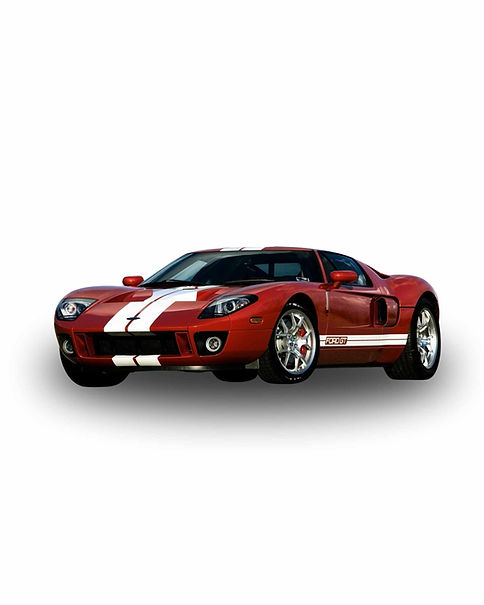
Design by Camilo Pardo.
The original GT40, created in the 1960s, became a legend at Le Mans.
Its story is deeply connected to Ferrari. When Enzo Ferrari refused Ford’s acquisition attempt, it triggered one of the most iconic rivalries in automotive history.
Ford’s mission became clear, to beat Ferrari at Le Mans. And they did.
In the early 2000s, Ford revisited this legacy.
Camilo Pardo reinterpreted the original design, bringing it into a modern context while respecting its roots.
The result is low, wide and muscular. Pronounced rear haunches, a clear ducktail, deep air intakes.
It carries American identity, but with a touch of European elegance.
A clean, powerful design.
A worthy continuation of a legend.
Aston Martin DB11
2010s
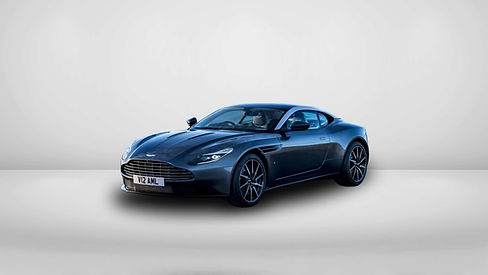
Design by Marek Reichman and Miles Nurnberger.
Aston Martin has always been the gentleman’s car.
Balanced proportions, subtle attitude, never overdone.
A design language built on finesse.
With the DB11, that language evolves.
The lines are tighter, slightly sharper, but without losing the overall silhouette. Details are more defined, supported by new materials that complement the classic chrome elements.
Surfaces are no longer blended in the same way. Instead, lines are more clearly expressed, closer to the original hand-drawn intent.
Reinvented, without losing identity.
As Syd Mead once described Aston Martin:
“Gorgeous examples of high-end automotive ambition rather than mass-produced commodities.”

Citroën 2 CV | 1948
Final Thoughts
The famous Citroën 2CV design brief by Pierre Boulanger stated:
“It required the car to be able to transport a basket of eggs across a plowed field without the eggs bursting.”
To follow the design brief is to follow the purpose of the car.
The entire research and development process is driven by communication between different specialists. Everyone involved in creating the final product must follow that brief.
It is usually defined by product planning, based on market research. Targets are set, customers identified, purpose clarified, so the design team can create the best possible outcome.
As Giorgetto Giugiaro said, car design is communication.
The car becomes an extension of yourself.
Something you express through what you choose to drive.
Cars are our outer dress. A tool for transportation, from A to B, but also a reflection of who we are, or who we want to be.
A Lamborghini expresses something very different from an Aston Martin.
Rock and roll, or elegance.
As Journey once sang:
“Any way you want it, that’s the way you need it.”
Because in the end, great car design is never just seen.
It is understood.