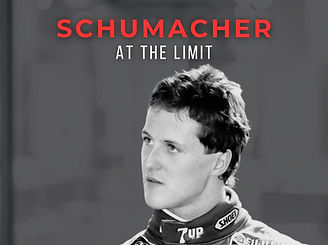
THE SHIFT Stories from Car Culture
THE SOUND
OF SPEED
Speed is not what you see.
It's what you hear.
By Peter George
Head of Sound & Motion, KINGSHIFT TV
Sound is not an accessory in a car.
It is not decoration, and it is not secondary to speed, design, or performance.
It is the first signal we register, and often the last we remember.
Before we understand what a car is doing, before we process speed, data, or numbers, we hear it.

Visual representation of sound waves
The First Signal
Before acceleration settles into the body, there is something else.
A frequency. A vibration. A tone.
Something that tells us, instinctively, what the machine is about to do.
I say this not as an observer, but as a sound engineer.
My work has always been about understanding how we perceive sound, how we attach emotion to it, how something invisible can define something entirely physical.
And nowhere is that relationship more intense than in a car.
Because an engine doesn’t just produce power.
It speaks.
Before sound begins
The First Time
There is always a first time.
Not the first time you saw the car, the first time you heard it.
It is like hearing your favourite song for the first time.
A moment in a Pink Floyd track where everything opens up.
A Prince guitar note that bends just enough to stay with you forever.
You do not analyse it.
You feel it.
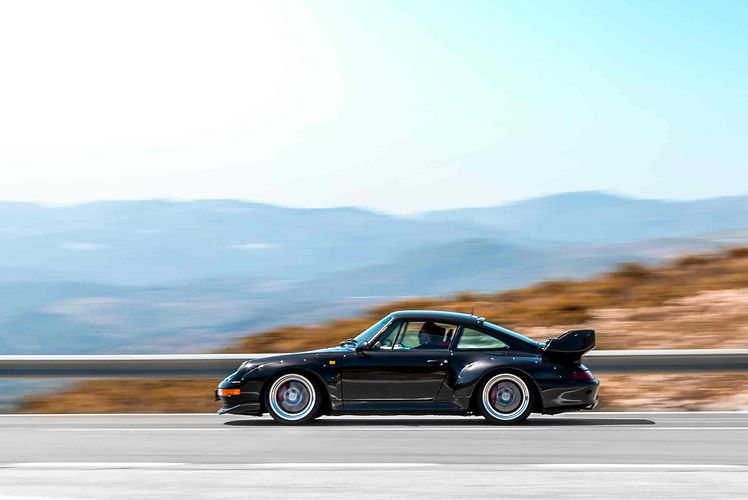
The sound of speed
The Moment
A car somewhere in the distance.
A sound rising out of nothing.
And suddenly everything else fades.
You stop.
You turn.
You listen.
And without understanding why, you remember it.
That is the moment where sound stops being information
and becomes memory.

You hear it before you see it
Voices, Not Machines
Engines are often described in technical terms, but that language misses the point.
They are not machines.
They are voices.
Each one shaped by architecture, timing, and intention, but experienced as something far more human.

Ferrari F50 V12
Ferrari F50
That engine does not simply make noise, it unfolds.
It builds like a symphony, harmonics layering on top of each other, opening wider the higher it climbs.
There is no sense of force for the sake of it.
It is not aggression.
It is expression.
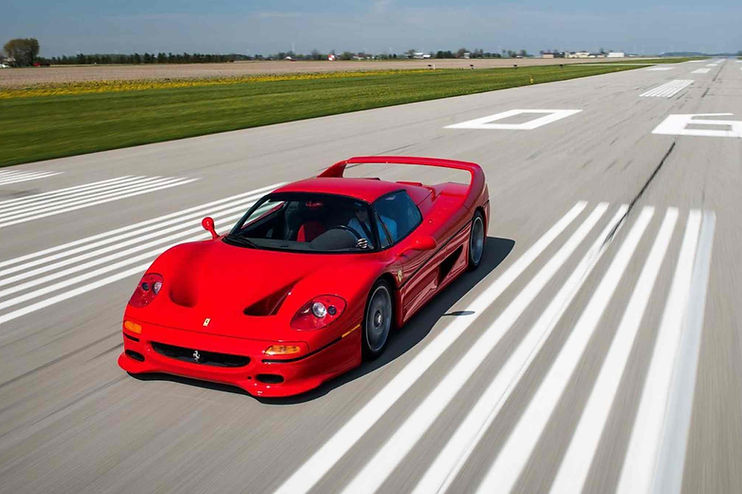
Ferrari F50
Countach vs Veyron
Lamborghini Countach and Bugatti Veyron may share the idea of ultimate performance, but they speak completely different languages.
The Countach is sharp, raw, unsettled.
Like distortion pushed just past the point of comfort.
The Veyron is something else entirely.
Layered.
Controlled.
Composed.
One cuts through the air.
The other surrounds it.
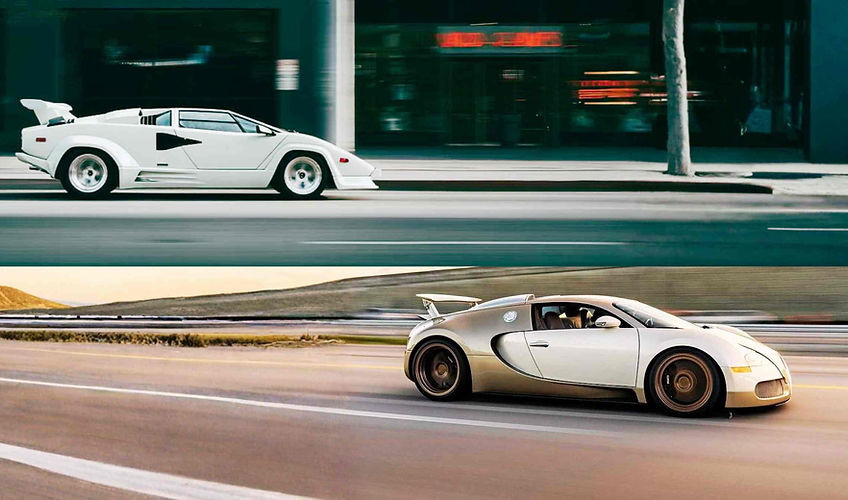
Countach and Veyron. Different eras. Different music.
Signatures of Power
Different engines do not just sound different, they connect differently.
A V8 is physical, like a heartbeat. Grounded and repetitive.
A V10 carries urgency, always on the edge of becoming something more.
And the V12…
The closest thing we have to music in mechanical form.
It does not pulse.
It flows.
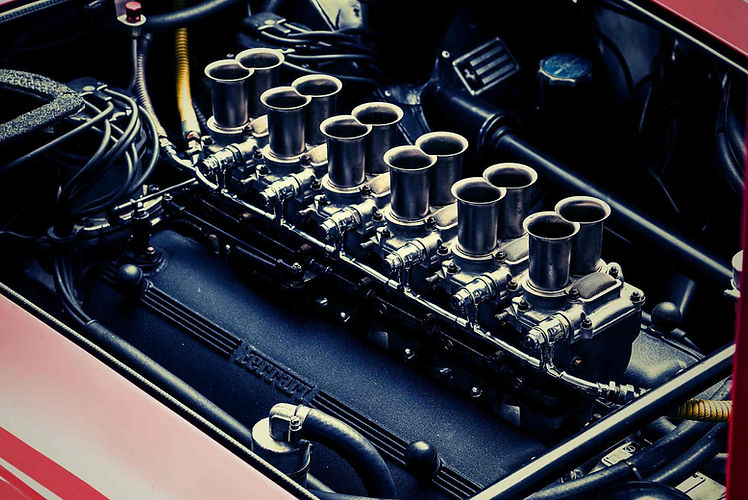
V12 Orchestra
“Before you understand speed,
you hear it.”
Lamborghini Aventador V12 Sound
Why It Feels Like Music
Because, in many ways, it is.
Combustion creates rhythm.
Cylinders create timing.
Exhaust systems create tone.
A downshift becomes a chord change.
Acceleration becomes a build-up.
The redline becomes the moment where everything peaks.
And instinctively, you do not want it to end.

Countach poster
Memory and Youth
Before we ever drove these cars, we lived through their sound.
Posters on the wall.
Late-night videos.
Standing on the side of a road, hoping something would pass.
And when it did, everything stopped.
For a few seconds, nothing else existed except that sound.
Years later, you hear it again, and you are back there.
That is what makes sound different.
It does not stay in your ears.
It stays in your life.
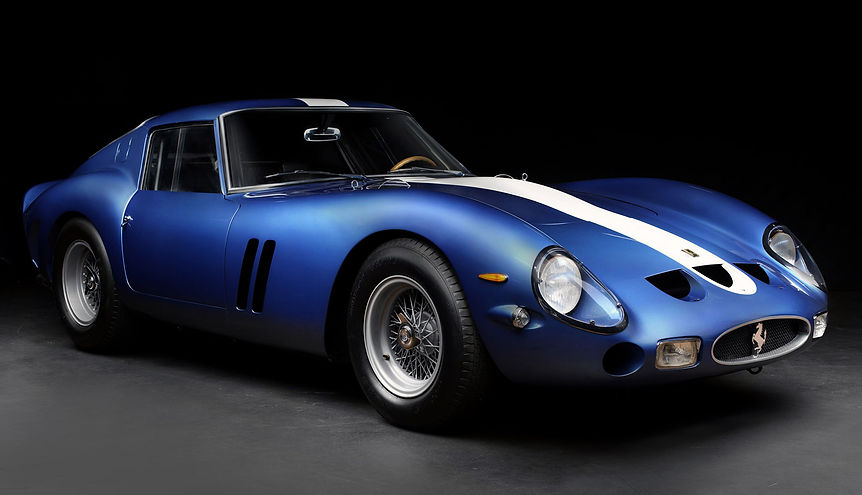
1962 Ferrari 250 GTO
From Honesty to Design
There was a time when cars did not try to sound good.
They simply were.
You heard everything, the imperfections, the strain, the raw effort of the machine.
It was not always beautiful.
But it was honest.
Today, sound is something we design.
Exhaust systems are tuned like instruments.
Cabins are shaped like acoustic spaces.
Frequencies are enhanced, controlled, sometimes recreated.
The goal is no longer just to reflect the machine.
It is to translate it.
And if the feeling remains, does it matter how it was created?

2019 Lotus Evija. 100% electric. 2,000HP
The Silence and the Future
Then everything changed.
Electric cars arrived, and the sound disappeared.
No crescendo. No rhythm. No warning.
Just motion.
At first, it felt like something had been taken away.
Because it had.
Now, the challenge is no longer engineering.
It is emotion.
We are moving into a quieter world, but sound, real sound, remains one of the last things that feels human.
It does not need explanation.
It just hits you.
Like a note that lands perfectly.
Like a moment you did not expect.
Like the first time you heard it and realised, this is not noise.
This is speed.