THE SHIFT Stories from Car Culture
There are drivers who become champions.
There are drivers who become legends.
And then there are drivers who become something far rarer.
A benchmark.
A reference point.
A measure against which generations are judged.
Fernando Alonso belongs to that final category.
For more than two decades, rivals have arrived carrying speed, youth, technology, and momentum.
And yet somehow, Fernando Alonso remains.
Still fighting.
Still adapting.
Still extracting performances that should not be possible.
Because while many drivers race to win championships, Alonso has spent his career chasing something different.
The limit itself.

The Boy From Oviedo
Before the championships.
Before Ferrari. Before Renault. Before Formula 1.
There was a three-year-old boy driving a homemade kart built by his father.
Not because anyone expected him to become a world champion.
But because he simply loved driving.
The obsession arrived early.
The victories arrived soon after.
As the years passed, the young Spaniard climbed through karting with the relentless determination that would later define his professional career.
Those who raced against him often noticed the same thing.
He rarely made mistakes.
And he never stopped learning.

Corridonia Pista Kart Competicionia, 1996
The Youngest Champion
When Fernando Alonso arrived in Formula 1, the sport was still dominated by one man.
Michael Schumacher.
Ferrari seemed untouchable.
The future appeared predetermined.
Then Alonso changed the script.
In 2005 he became Formula 1's youngest World Champion.
A year later he did it again.
Two championships.
Back-to-back.
Against one of the greatest dynasties motorsport had ever seen.
For an entire generation of fans, Alonso became the driver who proved that giants could be beaten.
Not through luck.
Not through superior machinery.
But through intelligence, consistency, and relentless execution.

Alonso was F1 Champion in 2005 and 2006
The Master Of Racecraft
Speed alone never defined Fernando Alonso.
What separated him from others was his understanding of racing.
The way he positioned a car.
The way he managed tyres.
The way he anticipated situations before they unfolded.
Overtaking was never simply aggression.
It was calculation.
Perhaps no moment captured this better than Suzuka 2005.
Around the outside of Michael Schumacher at 130R.
One of the fastest corners in motorsport.
One of the boldest overtakes of the modern era.
Years later Alonso would explain his thinking with typical simplicity.
Schumacher had a wife and two children.
He knew he would leave enough space.
Alonso saw an opportunity.
And committed.
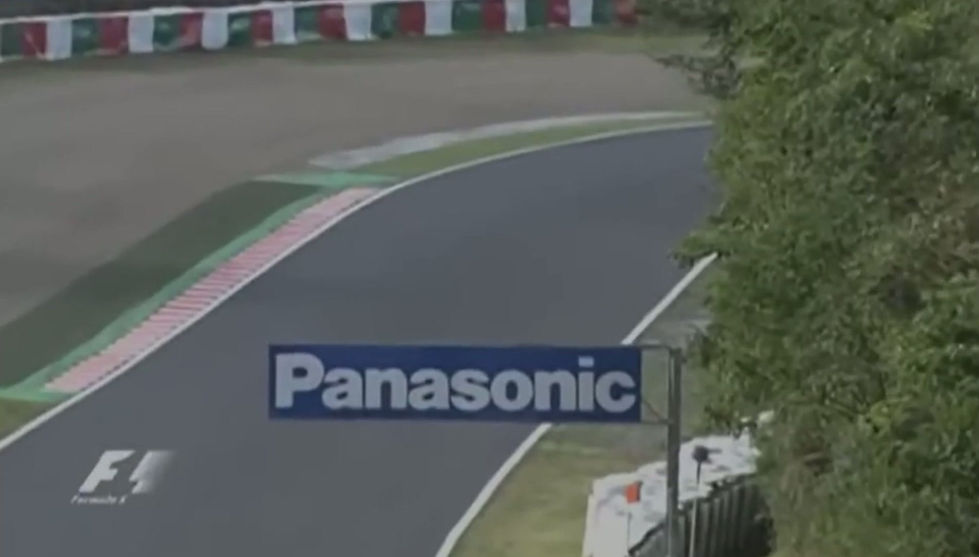
Alonso overtaking Schumacher in Suzuka, 2005
Ferrari's Unfinished Dream
For many drivers, Ferrari represents the summit.
For Alonso, it became one of motorsport's greatest "what if" stories.
Between 2010 and 2014 he carried the Scuderia through seasons where the car often lacked the pace to challenge consistently.
Yet somehow he remained in contention.
Twice he entered the final race of the season fighting for the World Championship.
Twice the dream slipped away.
The titles never arrived.
But something else did.
Respect.
Because even rivals acknowledged what they were witnessing.
A driver operating beyond the apparent limits of his machinery.
Fernando Alonso, Barcelona, 2012.

Looking Beyond Formula 1
Most world champions protect their legacy.
Alonso challenged his.
Instead of remaining safely inside Formula 1, he looked elsewhere.
To places where failure was possible.
To places where reputations could be damaged.
To places where new lessons waited.
Because for Fernando Alonso, racing was never about a single category.
It was about competition itself.
The next challenge. The next mountain. The next impossible task.

Alonso, Le Mans, 2019
Conquering Le Mans
In 2018 and 2019, Alonso turned his attention toward endurance racing.
The 24 Hours of Le Mans.
A race where speed matters.
But patience matters more.
A race where surviving the night can be as important as attacking during the day.
Many Formula 1 stars had tried.
Few had succeeded.
Alonso did. Twice.
Back-to-back victories.
Adding his name to one of motorsport's most prestigious rolls of honour.
For a driver already carrying two Formula 1 titles, it would have been enough.
But enough has never been part of Alonso's vocabulary.

Alonso erasing a 2-minute-plus penalty by consistently lapping 2 to 5 seconds faster, 24 Hours of Le Mans, 2018
The Pursuit Of The Triple Crown
There was also Indianapolis.
The most famous oval in the world.
The final piece required to complete motorsport's legendary Triple Crown.
Monaco. Le Mans. Indianapolis.
Alonso already possessed two of the three.
The temptation was irresistible.
Victory never came.
But the attempt revealed something important.
Most champions fear failure.
Alonso seems fascinated by it.
Because every challenge carries risk.
And every risk creates the possibility of greatness.

indy 500, 2017
Into The Desert
When many drivers his age were considering retirement, Alonso headed somewhere even more unforgiving.
The Dakar Rally.
A completely different discipline.
A completely different skill set.
A completely different world.
No smooth circuits.
No predictable conditions.
Only dunes, rocks, navigation, endurance, and survival.
The learning curve was brutal.
The challenge enormous.
And yet Alonso attacked it with the same curiosity that defined his karting days.
Not because it was easy.
Because it wasn't.

Dakar 2020
The Return
Most careers have chapters.
Alonso's career feels more like a series of sequels.
Every time people think the story is ending, another chapter appears.
After leaving Formula 1.
After winning Le Mans.
After Dakar.
After everything he had already achieved.
He returned.
Not for nostalgia.
Not for a farewell tour.
To compete.
And remarkably, he still does.
Against drivers young enough to be his children.
Against generations that grew up watching him race.
Against time itself.

Alonso's return to F1, 2021
The Limit Is Still Ahead
The easiest way to tell Fernando Alonso's story would be to focus on the victories.
The championships. The trophies. The records.
But that would miss the point.
Because Alonso's greatest achievement may not be what he has won.
It may be his refusal to stop searching.
For another challenge. Another race. Another opportunity to discover what lies beyond the known limit.
And that is why his story remains unfinished.
Because unlike most legends, Fernando Alonso has not yet become history.
He is still writing it.
Still chasing the next horizon. Still surprising us.
And after everything we have already witnessed, one truth remains.
When Fernando Alonso is involved, the unexpected is always possible.
Note: This article was originally written in Spanish and translated into English for publication in THE SHIFT.

