Context, Not Hype
2013 didn’t happen in isolation.
Regulation pressure was rising.
Emissions targets were tightening.
Formula 1 had already embraced hybrid systems.
For road cars, the question was inevitable:
How do you increase performance in a world that is asking you to reduce it?
The Real Challenge
This wasn’t about building the fastest car.
It was about managing energy.
Thermal efficiency.
Energy recovery.
Deployment strategies.
The combustion engine was no longer the only source of performance.
It became part of a system.

Three Different Interpretations
What makes the Holy Trinity significant is not that they are similar.
It’s that they are fundamentally different.
Three manufacturers.
Three architectures.
Three philosophies on how performance should evolve.
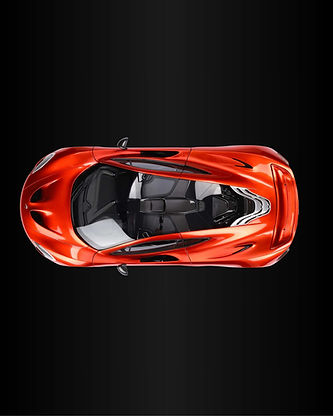
McLaren P1: System First
McLaren approached the problem as engineers.
The objective was clear:
Optimize lap time.
Everything else became secondary.


Integrated Performance
The P1’s hybrid system wasn’t added.
It was integrated from the start.
The electric motor filled turbo lag.
The IPAS system deployed power on demand.
The rear wing actively managed downforce and drag.
This wasn’t a car with hybrid assistance.
It was a hybrid system that happened to be a car.
The Result
903 hp
0–100 km/h in 2.8s
0–200 km/h in ~6.8s
Top speed: 350 km/h (electronically limited)
Twin-turbo V8 + electric motor
375 units
DRS-style active rear wing
Race mode lowering the car by 50 mm
Instant torque fill, eliminating turbo lag
On track, it delivered consistency.
Repeatable performance, lap after lap.
That was McLaren’s definition of superiority.
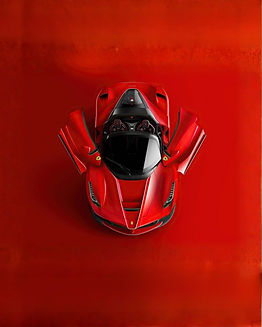
Laferrari: Power and Response
Ferrari approached the same problem differently.
They didn’t start with the system.
They started with the engine.
The V12 Remains Central
The naturally aspirated V12 was non-negotiable.
Hybridization had to serve it, not replace it.
The HY-KERS system was derived from Formula 1, but recalibrated for the road.
Its role was clear:
Fill torque gaps.
Enhance throttle response.
Deliver power instantly.

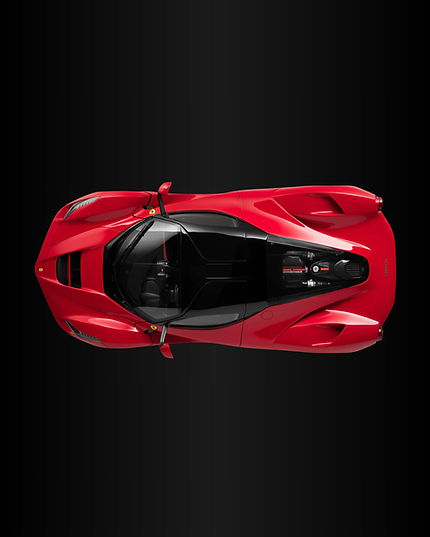
Character as a Metric
950 hp
0–100 km/h in 2.6s
0–200 km/h in ~6.9s
Top speed: 350+ km/h
V12 + HY-KERS
499 Coupes + 210 Apertas
9,250 rpm redline
163 hp electric boost from HY-KERS
Seamless torque fill and instantaneous throttle response
LaFerrari is less about efficiency curves and more about sensation.
Throttle response is immediate.
Power delivery is linear, but overwhelming.
It remains, fundamentally, a combustion car enhanced by electricity.
918 Spyder: System Balance
Porsche took a broader view.
Not just performance.
Usability.
Not just peak output.
Efficiency across scenarios.
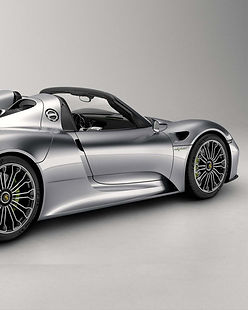

Architecture Advantage
A naturally aspirated V8, paired with two electric motors.
One at the front axle.
One at the rear.
This enabled all-wheel drive, torque vectoring, and multiple driving modes.
The system could adapt.
Innovation
887 hp
0–100 km/h in 2.6s
0–200 km/h in ~7.2s
Top speed: 345 km/h
V8 + dual electric motors
918 units
All-wheel drive with torque vectoring
Up to ~30 km of pure electric range
Weissach Package for weight reduction and track focus
It could run in full electric mode.
Or deliver maximum performance on demand.
At the Nürburgring, it proved its capability.
But what mattered more was its range of ability.

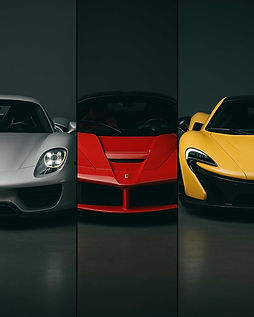
Three Ways to Solve One Problem
McLaren optimized performance through control systems.
Ferrari optimized performance through engine dominance.
Porsche optimized performance through system versatility.
None of them were wrong.
But none of them agreed.
The Turning Point
Before 2013, hybrid meant compromise.
It meant efficiency over emotion.
Weight over agility.
Silence over sound.
In most cases, it was an answer to regulation, not an ambition for performance.
But in 2013, that perception changed.
Not gradually, but decisively.
McLaren, Ferrari, and Porsche didn’t use hybrid systems to adapt.
They used them to gain an advantage.
Electric motors stopped being secondary components
and became central to how performance was delivered.
Torque was no longer something you waited for.
It was instant.
Power delivery was no longer linear by limitation, but engineered by intent.
And for the first time, energy management became as important as horsepower.
These cars didn’t follow a trend.
They forced the industry to rethink what performance could be.
After them, hybrid was no longer a compromise.
It was the new benchmark.

Ferrari SF90 Stradale | 2019

McLaren Artura Powertrain Systems
What Came After
Every modern hypercar, from hybrid V8s to electrified AWD systems, builds on principles established here:
Energy recovery.
Torque fill.
System integration.
What was experimental became standard.
Final Thought
Looking back, the Holy Trinity is less about comparison.
And more about direction.
Three manufacturers, working independently, arrived at the same conclusion:
The future of performance would not replace the past.
It would integrate it.


.jpg)